
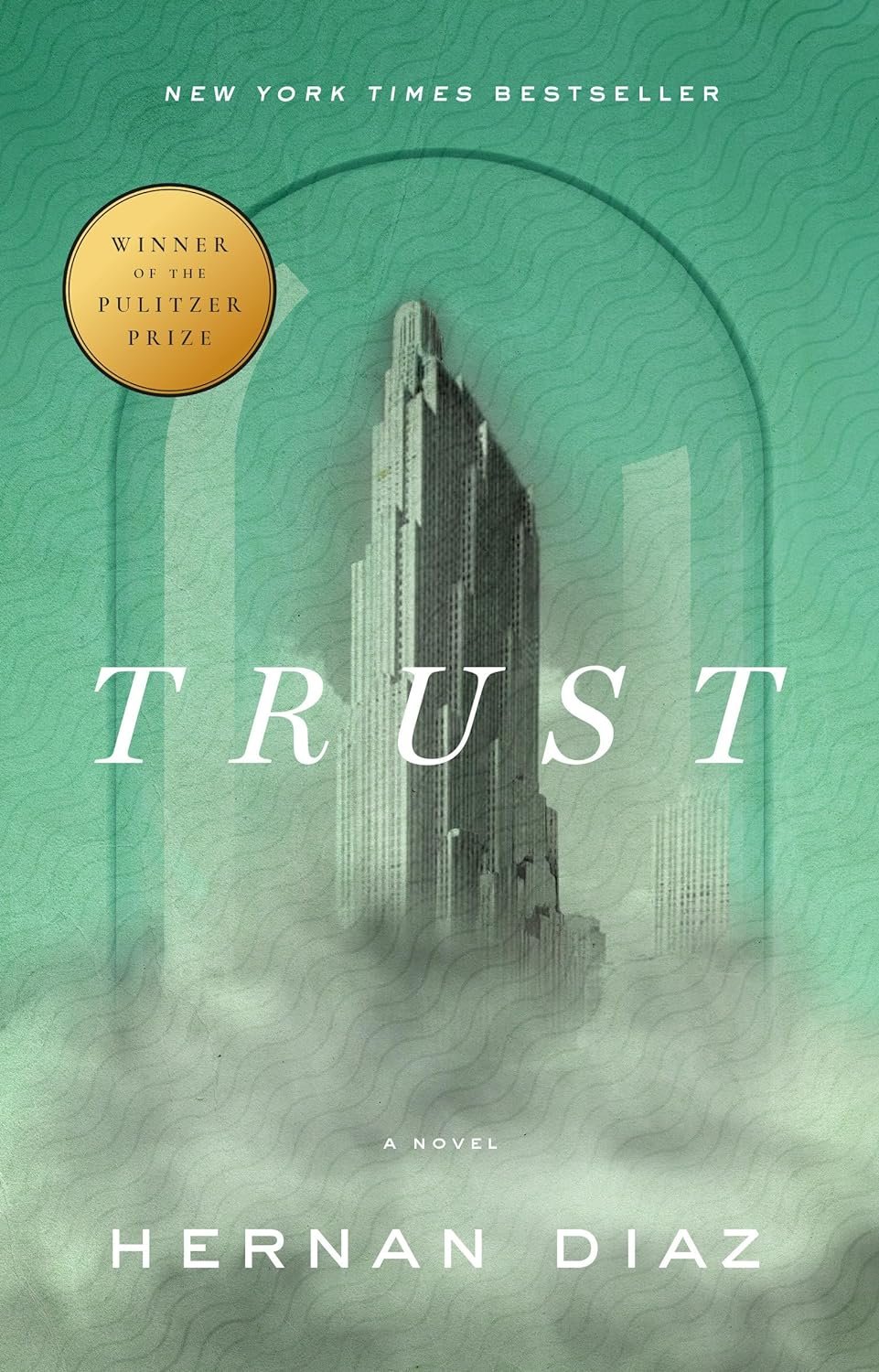
WINNER OF THE PULITZER PRIZE FOR FICTION
ONE OF THE NEW YORK TIMES’S 100 BEST BOOKS OF THE 21ST CENTURY
A NEW YORK TIMES BESTSELLER
ONE OF BARACK OBAMA’S FAVORITE BOOKS OF 2022
LONGLISTED FOR THE 2022 BOOKER PRIZE
An “exhilarating” (New York Times) and unparalleled novel about money, power, intimacy, and perception, from the bestselling author of the forthcoming novel PLY
“Buzzy and enthralling . . . A glorious novel about empires and erasures, husbands and wives, staggering fortunes and unspeakable misery . . . Fun as hell to read.” —Oprah Daily
“A genre-bending, time-skipping story about New York City’s elite in the roaring ’20s and Great Depression.” —Vanity Fair
“A riveting story of class, capitalism, and greed.” —Esquire
Even through the roar and effervescence of the 1920s, everyone in New York has heard of Benjamin and Helen Rask. He is a legendary Wall Street tycoon; she is the daughter of eccentric aristocrats. Together, they have risen to the very top of a world of seemingly endless wealth—all as a decade of excess and speculation draws to an end. But at what cost have they acquired their immense fortune? This is the mystery at the center of Bonds, a successful 1937 novel that all of New York seems to have read. Yet there are other versions of this tale of privilege and deceit.
View on Amazon
Hernan Diaz’s TRUST elegantly puts these competing narratives into conversation with one another—and in tension with the perspective of one woman bent on disentangling fact from fiction. The result is a novel that spans over a century and becomes more exhilarating with each new revelation.
At once an immersive story and a brilliant literary puzzle, TRUST engages the reader in a quest for the truth while confronting the deceptions that often live at the heart of personal relationships, the reality-warping force of capital, and the ease with which power can manipulate facts.
From the Publisher


Trust: A Brilliant Literary Puzzle About Money, Power, and Perception
Hernan Diaz’s Trust is an ambitious and thought-provoking novel that explores wealth, power, intimacy, deception, and the complicated relationship between truth and perception. Set against the world of New York’s financial elite during the Roaring Twenties and the Great Depression, the novel follows competing versions of a story surrounding immense wealth and the people who possess it.
Rather than presenting a single straightforward narrative, Trust challenges the reader to question what is true, who controls the story, and how easily facts can be reshaped by power. The result is an immersive literary puzzle that becomes increasingly intriguing as different perspectives begin to interact.
A World of Extraordinary Wealth
At the center of the story are Benjamin and Helen Rask, a couple who have reached the highest levels of New York society.
Benjamin Rask is a legendary Wall Street tycoon, while Helen is the daughter of eccentric aristocrats. Together, they represent a world of extraordinary privilege and seemingly limitless wealth. Their rise takes place during the prosperity and excess of the 1920s, a period when speculation and financial ambition were transforming American society.
Yet their immense fortune raises an important question: How exactly did they acquire it?
That question becomes one of the central mysteries of the novel.
The Mystery Behind the Fortune
The story introduces Bonds, a successful novel published in 1937 that has apparently captured the attention of New York society. The book presents its own version of Benjamin and Helen Rask’s story, including questions surrounding their wealth and privilege.
But Bonds is not necessarily the complete truth.
This is where Trust becomes especially fascinating. Instead of simply telling readers what happened, Hernan Diaz introduces competing narratives and encourages readers to examine the differences between them.
The story becomes a search for the reality hidden beneath layers of storytelling, interpretation, and deception.
A Novel About Competing Narratives
One of the most distinctive qualities of Trust is its approach to storytelling.
The novel places different versions of events into conversation with one another, creating tension between what is presented as fact and what may actually have happened. This structure turns the act of reading into part of the mystery.
Rather than passively receiving information, readers are encouraged to examine it.
Who is telling the truth?
Who has the power to shape the narrative?
What has been omitted?
And how much can perception change our understanding of the past?
These questions give Trust an intellectual quality while maintaining the momentum of a mystery.
Money as a Force That Changes Reality
Money is more than a background element in Trust. It is one of the novel’s central subjects.
The immense fortunes surrounding Benjamin and Helen Rask create a world where wealth influences not only social position but also how events are understood and remembered. Capital becomes a force capable of changing perceptions and shaping narratives.
The novel examines the relationship between financial power and reality, suggesting that extraordinary wealth can affect the way people interpret the world around them.
This makes the book particularly compelling for readers interested in stories about capitalism, financial power, class, and inequality.
Power and the Ability to Control the Story
Another major theme is power.
Trust explores how powerful people can influence not only events but also the stories told about those events. When different versions of the same history exist, the person with greater influence may have a better opportunity to determine which version becomes accepted.
This idea gives the novel a broader relevance beyond its historical setting.
The book asks readers to consider how narratives are constructed and how easily facts can be manipulated when power is involved. The question of who controls the story becomes almost as important as the question of what actually happened.
Intimacy and Personal Relationships
Although money and capitalism are major themes, Trust is also deeply concerned with personal relationships.
The relationship between Benjamin and Helen becomes part of the larger mystery surrounding their lives. Their immense wealth and social position do not necessarily provide simple or uncomplicated personal lives.
The novel examines intimacy alongside ambition, privilege, and perception. Personal relationships become another place where appearances and reality may not always match.
This gives the story a human dimension that complements its larger exploration of financial power.
A Genre-Bending Reading Experience
Trust does not fit neatly into a single category.
It contains elements of historical fiction, mystery, literary fiction, and a kind of narrative puzzle. Its genre-bending structure allows Diaz to explore the same broad story from different angles while constantly encouraging the reader to reconsider earlier assumptions.
The time-skipping approach also gives the novel a wide historical scope. Although much of the story is connected to New York during the 1920s and Great Depression, its concerns extend far beyond that particular period.
The novel ultimately becomes a larger examination of how history, memory, wealth, and storytelling interact.
The Question of Truth
The title Trust is particularly fitting because trust itself becomes an important part of the reading experience.
Readers must decide which information to believe and how much confidence to place in each narrative. As different perspectives emerge, certainty becomes increasingly complicated.
This creates an unusual relationship between the book and its reader. The novel does not simply ask you to follow a story—it asks you to investigate one.
Every perspective can potentially reveal something important, but it can also raise new questions.
That balance between discovery and uncertainty is one of the book’s most compelling qualities.
A Story That Spans More Than a Century
Although the central setting is strongly connected to New York’s elite during the Roaring Twenties and the Great Depression, Trust ultimately becomes a story with a much broader historical reach.
Its examination of wealth, power, perception, and narrative allows it to move beyond a single decade or generation. The novel considers how stories survive, how they change over time, and how different perspectives can create radically different interpretations of the same events.
This expansive approach contributes to the book’s literary ambition.
Why Trust Stands Out
What makes Trust particularly memorable is the way its form supports its themes.
A conventional story about a wealthy Wall Street figure could simply explain how he achieved his fortune. Trust takes a more complicated approach, presenting competing versions and making the reader question the reliability of what is being presented.
That approach mirrors the novel’s central concerns.
If wealth can influence perception, and power can influence history, then finding the truth becomes far more complicated than simply locating a single set of facts.
The book turns that uncertainty into part of its appeal.
Final Verdict
Trust by Hernan Diaz is a sophisticated and engaging novel about money, power, intimacy, capitalism, greed, deception, and the elusive nature of truth. Through the story of Benjamin and Helen Rask and the competing narratives surrounding their lives, the novel creates a fascinating literary puzzle that constantly challenges the reader’s assumptions.
Its historical setting provides an immersive backdrop, while its unusual structure gives the story a deeper intellectual dimension. Rather than offering one simple explanation, Trust encourages readers to examine how stories are created, how facts can be manipulated, and how power can influence what people believe.
For readers who enjoy literary fiction, historical settings, mysteries, complex narratives, and thought-provoking stories about wealth and power, Trust offers an unusually compelling reading experience. It is a novel that does more than tell a story—it invites the reader to question the story itself.